Africa · Uganda
Bwindi Impenetrable Forest
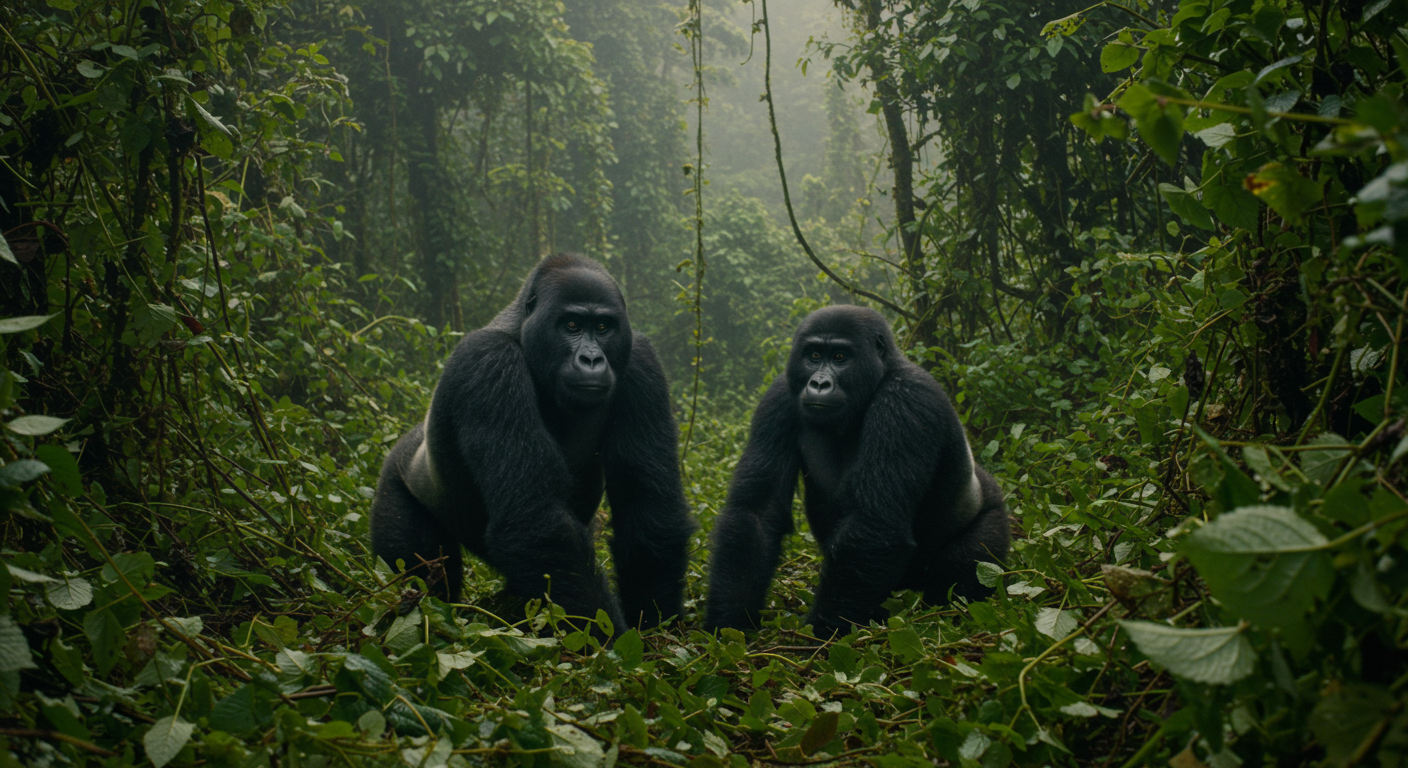
One of Africa's most profound wildlife encounters trekking mountain gorillas through ancient mist-shrouded rainforest to sit face-to-face with our closest relatives.
About Bwindi Impenetrable Forest
Bwindi Impenetrable National Park is Uganda's premier wildlife destination and home to nearly half the world's remaining mountain gorillas. The park's ancient montane rainforest some trees over 400 years old sits in the dramatic Albertine Rift at altitudes between 1,160m and 2,607m. Trekking through dense forest to spend one hour with a habituated gorilla family is one of the world's most extraordinary wildlife experiences. Beyond gorillas, Bwindi protects over 350 bird species including many Albertine Rift endemics.
Highlights
- Mountain gorilla trekking / habituation half the world's population
- Albertine Rift endemic birds
- Ancient rainforest ecosystem
- Batwa pygmy cultural experiences
- Bwindi Impenetrable National Park – premier gorilla trekking destination
- Home to nearly half of the world’s remaining mountain gorillas
- Ancient montane rainforest with trees over 400 years old
- The scenic Albertine Rift with dramatic highland landscapes
- Once-in-a-lifetime gorilla trekking experience with a habituated family
Best Time to Visit
June – August and December – February offer the driest trekking conditions. Gorilla permits must be booked months in advance.
Weather & Seasons
Bwindi's montane forest creates its own microclimate. The forest receives rainfall throughout the year but has drier periods from June to August and December to February. Expect cool temperatures and mist at any time.
Long Dry Season
Jun – Aug
Driest and most comfortable for trekking. Trails less muddy and gorillas easier to track.
Short Dry Season
Dec – Feb
Second best period for trekking with lower rainfall. Cool, clear mornings and good forest walks.
Short Rains
Sep – Nov
Rain showers and muddy trails. Gorilla trekking still operates; forest is lush and green.
Long Rains
Mar – May
Heavy rainfall makes steep trails very muddy and challenging. Gorilla trekking continues but is harder.
Gallery


Tours in Bwindi Impenetrable Forest

Bwindi Gorilla & Queen Elizabeth Safari
Wildlife · 10 Days
Bwindi Impenetrable Forest, Uganda
From $8,499